
Books by Shakti Tiwari
Practical guides by Shakti Tiwari (NISM-Series-XII certified) for Indian retail traders who want to understand the tools, assumptions and limits of AI trading.
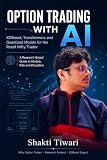
Option Trading with AI
XGBoost, Transformers and Quantized Models for the Retail Nifty Trader. Covers feature engineering, walk-forward validation, leakage control, and a complete 5-layer ML pipeline for Nifty options.
ASIN: B0H9ZNTBPK · Price: ₹199-₹449
Buy on Amazon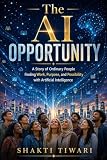
The AI Opportunity
AI, Neuroscience, and the Future of Indian Markets. How ordinary Indians can build production-grade AI for free using local models, Termux, and open-source tools.
ASIN: B0HBBFKDQF · Price: ₹249-₹449
Buy on AmazonWhat you will learn from Option Trading with AI
- The 5-layer pipeline: Data Engine, Feature Engineering, Predictor, Risk Filter, Executor.
- Leakage control — the single most common reason retail backtests look unrealistically profitable.
- Walk-forward validation done correctly with anchored and rolling windows.
- XGBoost feature engineering for option chains: OI, PCR, Greeks, IV rank and regime features.
- Running quantized models on an Android phone with Termux — no cloud, no expensive GPUs.
- Position sizing by premium risk rather than notional exposure.
The book is written for a trader with a spreadsheet background. You do not need a formal engineering degree. Code snippets use pandas, scikit-learn and XGBoost with commentary that explains what each step does and why it exists in the pipeline.
What The AI Opportunity covers
- Applied AI for people outside big tech: local models, Ollama, Termux and free open-source stacks.
- The relationship between AI systems and human decision-making — where judgement still matters in markets.
- Practical project roadmaps for Indian students and professionals.
- Why owning your data and models matters when markets are involved.
This book is for readers who want to go from AI consumer to AI builder. It treats models as tools to be operated with care, and concentrates on actionable workflows rather than theory.
FAQ: Frequently asked questions
- Are the books available as Kindle? Both titles are listed on Amazon India; availability can vary, so check the product page for Kindle or paperback options.
- Is all site content free? Yes. This website hosts 300+ free articles. The books are optional paid products and buying them is not required to use the free curriculum.
- Do the books give investment advice? No. They are educational material about machine-learning methods and trading concepts. Nothing in them is a recommendation to buy or sell any security. Continued disclaimers apply.
- Will the code work on Windows? The examples are portable: pandas, scikit-learn and XGBoost run on Windows, Linux and macOS, and the Termux sections cover Android.
- Where can I discuss the book content? Join the free Telegram community at t.me/shaktitrade, or reach Shakti on X (@shaktitiwari).
A note on pricing and access
Shakti keeps book prices low because he believes education should not be locked behind expensive courses. If you cannot afford even the listed price, the full text of the site is free — and the models and concepts in the books are explained article by article here too.
Who should read these books
Option Trading with AI is aimed at a retail derivatives trader who has moved past the basics of options and now wants to understand how machine learning changes the game. It assumes familiarity with calls, puts, strikes, expiry and the Greeks, but not with programming.
Readers who will get the most value are those who keep running into the same wall: every backtested strategy they build collapses once it meets live spreads, slippage and regime changes. The book's chapters on leakage control, walk-forward validation and cost-adjusted evaluation go straight at that wall.
The AI Opportunity is written for a broader audience: Indian students, working professionals, and curious retirees who want to understand practical AI without a computer-science degree. It deliberately avoids academic notation and instead builds intuition around terms like fine-tuning, RAG and quantisation using examples drawn from Indian life and Indian markets.
If you are a complete beginner to options, start with the free articles on the site first, in particular the options basics and Greeks sections. The books assume enough context that a complete newcomer will find the first chapters challenging without the free curriculum as groundwork.
How the two books fit together
The two titles are not a series in the traditional sense; they share a philosophy but serve different jobs. Option Trading with AI is the technical manual: it takes one domain, options on Indian indices, and shows the complete research-to-live journey.
The AI Opportunity is the conceptual companion: it explains why local models, private data and beginner-friendly tooling matter, and how to think about AI as a tool an ordinary person can operate rather than a service bought from a vendor. Many readers prefer to read The AI Opportunity first to build the mental model, then move to the technical manual.
Both books share the same editorial discipline: numbers are shown with their assumptions, code is shown complete rather than abridged, and each claim points back to puttable material. Readers who finish both frequently tell Shakti the same thing — the books left them asking better questions, which is the intent.
The free curriculum on this site
Nothing in either book is paywalled on the site. Every technique — from building an XGBoost model for Nifty to quantising a model for Termux — appears in article form here, updated as markets and tooling change.
The site currently hosts more than 700 free articles organised into: Options trading fundamentals and strategies, Machine learning for financial markets, Crypto trading and on-chain analysis, Indian market structure and regulation, and Hindi-language educational guides. The books compress that knowledge into a structured 300-page path; the site keeps it live and current.
Because the site evolves, the printed books may lag the latest articles on topics such as new SEBI circulars or new model releases. When you find a discrepancy, the website is authoritative; correction requests are welcomed through the community channels.
Where to go next
If you would like a guided path, start with the options Greeks and IV-rank articles, then move to the walk-forward validation series, and finish with the book that matches your profile. The Telegram community at t.me/shaktitrade is the fastest place to ask which order suits your background.
Alternatively, browse the articles by category from the navigation above, or jump straight to the machine-learning section if your background is in ML and your interest in options is growing. Each article links to related reading, so you can drift from one topic to the next without losing context.
Whichever route you take, remember the site's ground rule: verify everything you can, challenge what you cannot, and treat every published number as a hypothesis you are welcome to test.
How the books relate to the website
Each book chapter maps to free guides on this site. Read an article first, then buy the book if you want the deepened, structured version. Many readers report that the website is enough to start, and the books are a convenient offline reference for busy days.
Selling the vision versus selling the book
The author's goal is not to sell copies through pressure but to earn readers through transparency. Every claim in the books and articles is built on reproducible work: datasets, validation windows and costs are disclosed wherever they matter. A reader who understands the reasoning behind a strategy is better positioned than one who simply memorises an entry rule.
If you find an error, or believe a figure no longer matches the market, the correct reaction is to report it rather than dismiss the whole book. The community channels are the fastest route. Every genuine correction has been incorporated into later editions, and the printed books and web articles are kept in sync wherever practical.
For readers who prefer learning in small doses, the website's Telegram group posts short examples and market-rule reminders. These are free, and many of them later grow into full articles. Joining is a low-commitment way to stay current between book releases, and the group's archive makes a practical reference for revisiting past explanations whenever a rule or figure needs re-checking.